
The Procurement Act 2023 came into force on 24 February 2025. It replaced the old Public Contracts Regulations 2015 for new UK public-sector tenders. If you run a soft FM business in cleaning, security, grounds, waste, catering or pest control, three changes matter most. More contracts are now published openly. You can join always-open Dynamic Markets. And one Central Digital Platform stores your company data once and reuses it across every bid.
What's in this guide
- What changed and when
- The new procurement procedures
- The Central Digital Platform
- Frameworks and Dynamic Markets
- What MAT means for how your bid is scored
- Transparency: the new notices to watch
- SME-friendly changes built into the Act
- New risks: debarment and performance tracking
- What soft FM suppliers should do this week
What changed and when

The Procurement Act 2023 received Royal Assent in October 2023 and went live on 24 February 2025. It is the biggest overhaul of UK public procurement since Brexit. It replaced the Public Contracts Regulations 2015, the Concession Contracts Regulations 2016 and the Utilities Contracts Regulations 2016 in one Act.
If a procurement started before 24 February 2025, the old rules still apply until that contract is awarded. Anything new now runs under the Act. So a cleaning tender notice published in March 2025 is under the new rules. A framework call-off from a 2024 framework is not.
The new procurement procedures
The Act trims the messy old list of procedures down to two main ones plus a few special cases. Most soft FM contracts use the Open procedure. Larger or bundled FM deals use the Competitive Flexible procedure.
| Procedure | What it is | When you'll see it |
|---|---|---|
| Open procedure | Single stage. Any supplier can submit a bid against the published spec. | The default for routine cleaning, catering, grounds, security, waste and pest contracts. |
| Competitive Flexible procedure | Bespoke multi-stage process. Buyer can design their own stages, timelines and criteria. Negotiation rounds allowed. | Larger FM bundles. Innovative or complex contracts. Use is rising as buyers settle into the Act. |
| Direct award | No competition. Allowed only on narrow grounds: extreme urgency, protection of life, sole supplier. | Rare. The pandemic PPE buying was the headline example. |
| Light touch regime | A flexible regime for certain service categories with their own rules. | Some health, social care and education services. |
The procedures you will see on Find a Tender and Contracts Finder.
The Competitive Flexible procedure also allows intermittent assessment. A buyer can check at each stage whether you still meet their minimum requirements, and drop you out before final tender. That is a change from the old fixed two-stage model. It can save you weeks of writing on a bid you could not win anyway.
The Central Digital Platform
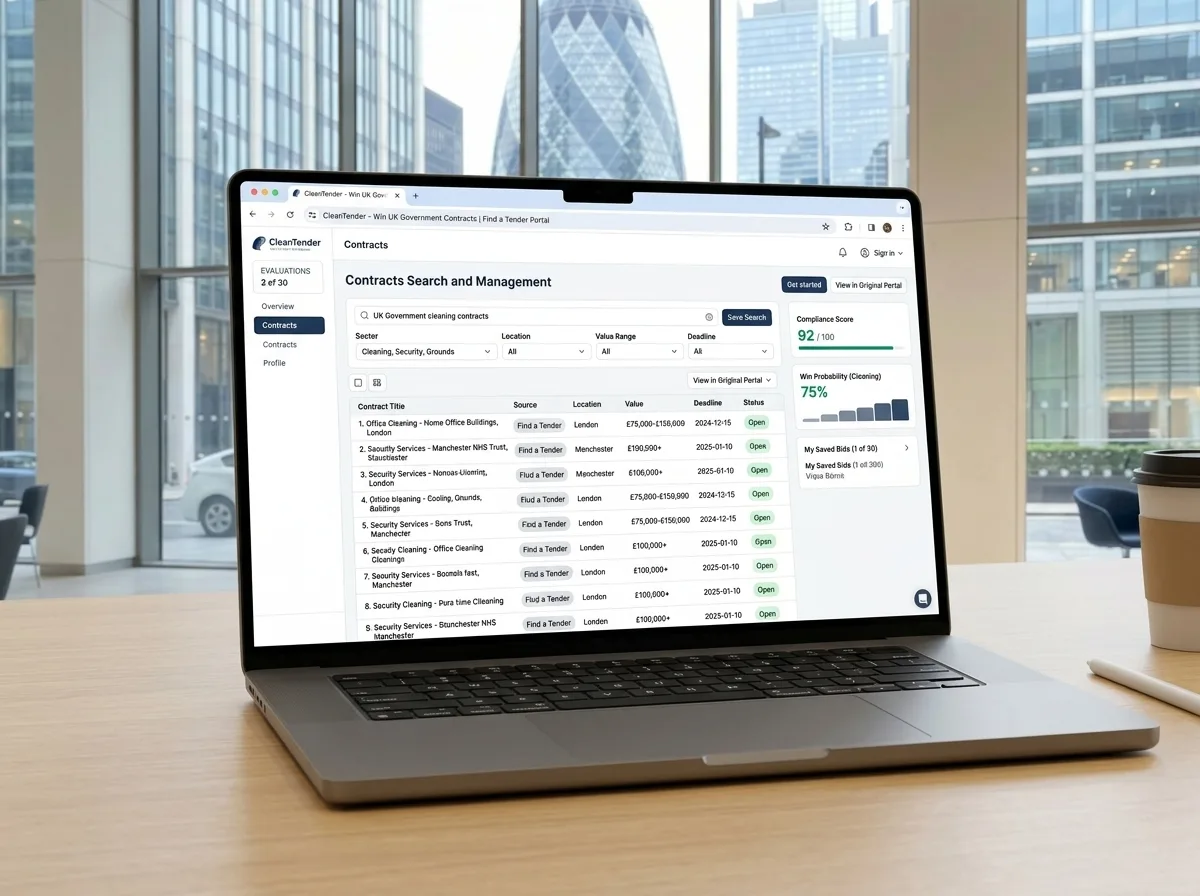
All suppliers and all contracting authorities must register on the Central Digital Platform. Your company information goes in once. After that, every public sector tender pulls from the same record. No more re-typing your insurance figures, your ISO numbers and your turnover into a new portal each month.
Find a Tender, the high-value portal, is the front door to the platform. It now also covers more notices below the old £135,018 threshold. The platform is free to access for both buyers and suppliers.
Phase 2 of the rollout, due in September 2025, adds payment compliance notices and contract performance assessment notices. Both let you see how a buyer treats its current suppliers before you decide to bid for their work.
Frameworks and Dynamic Markets
The Act keeps frameworks but adds two SME-friendly tweaks. It also replaces Dynamic Purchasing Systems (DPS) with Dynamic Markets (DM).
If you are unsure how a framework works in the first place, see the plain-English explainer on what is a tender for a definition that covers frameworks too.
| Topic | Pre-2025 (PCR 2015) | Post-Feb-2025 (Act) |
|---|---|---|
| Maximum framework duration | 4 years for most. Closed once awarded. | 8 years for an Open Framework. Must re-open to new suppliers within 3 years, then again within 5. |
| Joining mid-term | Locked out for the framework's life. | Open Frameworks must re-open at set intervals. |
| DPS / Dynamic Markets | DPS only. Tender notice not always required for call-offs. | Replaced by Dynamic Markets. Apply any time. Buyer must publish a tender notice for each competition. |
| SME duty | No specific lots duty. | Buyer must consider whether the contract can be split into lots, and explain in writing if not. |
Old framework rules vs Procurement Act 2023.
For a soft FM SME, Dynamic Markets are usually the lowest-effort way in. You apply once, the buyer assesses you against the market's published rules, and you stay on the list. When work appears, the buyer runs a mini-competition between members. You bid without going through pre-qualification again.
What MAT means for how your bid is scored
The Act replaces Most Economically Advantageous Tender (MEAT) with Most Advantageous Tender (MAT). One word, one big shift in scoring.
Under MEAT, buyers had to award on a price-and-quality balance, with price often dominant. Under MAT, the buyer can give more weight to quality, social value, sustainability and supplier innovation. Pure-price awards are now harder to justify and buyers must publish their reasoning.
For a small soft FM firm, that is good news on three fronts. Real local social value commitments score higher than they used to. Environmental policies (zero-emission machinery, pesticide-free grounds methods, single-use plastic reduction) now carry visible weight. And buyers must publish a full assessment summary so you can see exactly why you scored what you scored.
Transparency: the new notices to watch
The Act adds new notice types and lowers the visibility threshold. Below-threshold contracts that used to be invisible to outside SMEs are now mandatory to publish.
| Notice | What it tells you | Threshold |
|---|---|---|
| Pipeline notice | An 18-month forward look at planned procurements. Lets you plan ahead. | Authority must spend over £100m a year. Procurements over £2m are listed. |
| Preliminary market engagement notice (PMEN) | The buyer is consulting suppliers before formally tendering. Your chance to shape the spec. | Most procurements covered. |
| Tender notice | Live opportunity to bid. | All public procurements. |
| Below-threshold notice | Smaller contracts that used to be invisible. Big new SME pool. | Above £12,000 (central gov) or £30,000 (sub-central). |
| Contract award notice | Who won and at what price. Useful for monitoring competitors. | Within 30 days of contract signing. |
| Performance assessment notice | How a current supplier is performing on a live contract. KPI-based. | Mandatory above £5m where the contract has at least 3 KPIs. |
| Payment compliance notice | Whether the buyer is paying its current suppliers within 30 days. | All in-scope authorities. |
The notices most relevant to a soft FM SME under the Procurement Act 2023.
If you want to compare where to find these notices, see the best free tender sites in the UK comparison and the side-by-side review of the best tender alert services.
The bigger visible pool also means below-threshold buyers increasingly source small soft FM contracts through Google searches and supplier directories rather than formal tender notices. CleanTender's Verified Supplier Directory (coming soon to Pro) gives every supplier a public, indexable profile that buyers find when they search for local cleaning, security, grounds, waste, catering or pest contractors.
SME-friendly changes built into the Act
Three parts of the Act are written specifically to help small firms compete with the big FM names.
- Duty to consider lots: the buyer must think about splitting a contract into smaller lots. If they do not split, they have to explain why in writing. So a county-wide cleaning bundle that used to lock out everyone except the big four can now end up as 12 borough-level lots.
- Removing SME barriers: the buyer must assess what gets in your way and consider how to remove it. Examples include shorter bid windows, lower turnover thresholds, and accepting parent-company financials for newer firms.
- Wider evidence accepted: under PCR 2015, you often had to provide a specific named certificate. Under the Act, the buyer must accept any evidence that proves the underlying point. So a 12-month internal H&S audit can sometimes replace an annual SSIP renewal you have not finished yet.
- Mandatory assessment summary: the buyer must give you full feedback on every criterion, sub-criterion and mark. No more black-box scoring.
- 8 working day standstill: above-threshold awards have a mandatory 8-working-day pause before contract signing. You can challenge during that window.
New risks: debarment and performance tracking
The Act introduces a centralised debarment list. Suppliers on it are excluded from public contracts across the whole UK public sector, not just the authority that flagged them.
There are mandatory grounds for debarment (fraud, modern slavery, corruption, tax evasion) and discretionary grounds (poor past performance, financial instability, breach of contract). The Procurement Review Unit (PRU) within the Cabinet Office runs the list.
Performance tracking under the Act is also more public. Contracts above £5m with at least 3 KPIs must publish at least one annual assessment. So if you take on a big NHS cleaning contract and miss a target, your performance score can show up as a notice the next buyer reads before they invite you to bid.
What this means for SMEs is straightforward. Keep your records clean. Pay your own subcontractors on time. Hit your KPIs. Treat every contract as a live audit because it now is.
What soft FM suppliers should do this week
- Register on the Central Digital Platform via Find a Tender. Upload your insurance certs, ISO 9001 / 14001 / 45001, BICSc or SSIP membership, last three years of accounts and modern slavery statement (if 50+ staff).
- Search Find a Tender and Contracts Finder for any Dynamic Market in your sector. Apply now even if you have no live tender. The whole point of a DM is the work comes later.
- Subscribe to pipeline notices for the authorities you care about. Set CPV alerts so you only see soft FM work.
- Update your bid library to reflect MAT scoring. Quote real social value commitments using PPN 002 and the National TOMs framework. Show carbon-saving methods, not just intent.
- Read every assessment summary the buyer publishes after a bid you lose. Under the Act they have to tell you exactly where you scored badly.
- Pay your subcontractors within 30 days. Late payment to your supply chain is now a debarment risk.
When you are ready to bid your first tender under the new rules, the step-by-step UK government contracts guide walks through the mechanics. For sector-specific bid plays, see the cleaning, security and school catering guides.
One last thing
The Procurement Act 2023 is genuinely good news for UK soft FM SMEs who keep clean records. The big four FM contractors no longer have a paperwork moat. Your job is to be ready when the work is published. That means a current Central Digital Platform profile, a Compliance Vault you actually update, and a bid library that quotes the right framework.
One related rule worth knowing if you draft any of your bid with AI: PPN 017 (live the same day as the Act, 24 February 2025) sets the disclosure rules for AI use in tender responses. The verbatim Annex B questions and what scores vs what disqualifies are in the PPN 017 plain-English guide for cleaning SMEs.
Want to know if your evidence pack is ready for the new rules? Our free SQ readiness checker scores your policies and certificates against the Procurement Act 2023 selection stage in a few minutes.
Sources
- Procurement Act 2023 (legislation.gov.uk) · The Act in full. In force for new procurements from 24 February 2025.
- Transforming Public Procurement (Cabinet Office) · Buyer and supplier guidance from the Cabinet Office.
- Procurement Act 2023: A Guide for SMEs (YPO / Go4Growth, June 2024) · Plain-English summary aimed at small suppliers. Source for the changes table above.
- Find a Tender Service · Front door to the Central Digital Platform.
- Contracts Finder · Below-threshold UK contracts. Mandatory above £12k (central) and £30k (sub-central).
FAQs
Frequently asked questions
- 24 February 2025. The Act received Royal Assent in October 2023 and applies to all new public-sector procurements from 24 February 2025 onwards. Procurements that started before that date still run under the old Public Contracts Regulations 2015 until they finish.
- MEAT stood for Most Economically Advantageous Tender. MAT stands for Most Advantageous Tender. Under MEAT, buyers had to award on a price-and-quality balance, with price often dominant. Under MAT, buyers can give more weight to quality, social value, environmental sustainability and innovation. Pure-price awards are harder to justify and the buyer must publish their reasoning.
- Yes. Supplier registration on the Central Digital Platform via Find a Tender is mandatory under the Procurement Act 2023. You upload your company information, insurance certificates, accreditations and policies once. Every public-sector tender then pulls from the same record, so you do not retype the same data into each new portal.
- A Dynamic Market is the new always-open pre-qualified pool of suppliers introduced by the Procurement Act 2023. It replaces the old Dynamic Purchasing System. The two big differences for SMEs: under a DPS, the buyer could call off contracts without publishing a fresh tender notice. Under a DM, the buyer must publish a tender notice for each mini-competition. And applications to join a DM stay open continuously. You can apply any time, not just during an initial window.
- An Open Framework can run for up to 8 years. The contracting authority must re-open it to new suppliers at least once within the first 3 years, then again within 5 years. The point is to stop multi-year frameworks locking out latecomers. If you missed the original window, you now have at least two chances to join during the framework's life.
- 30 days. Public-sector buyers must pay suppliers within 30 days of an undisputed invoice. The 30-day obligation passes through to subcontractors as well, so your prime contractor cannot use you as their cash-flow buffer. Buyers must also publish a payment compliance notice that shows whether they are meeting the deadline. If a buyer is missing it, you can see that before deciding to bid for their work.
- The debarment list is a centralised list of suppliers excluded from public contracts across the UK. It is maintained by the Procurement Review Unit (PRU) inside the Cabinet Office. Mandatory grounds for debarment include fraud, modern slavery, corruption and tax evasion. Discretionary grounds include poor past performance and financial instability. To avoid it: keep clean records, hit your KPIs on existing contracts, pay your own subcontractors on time, and respond quickly if a buyer raises a performance concern.
- Mainly England and Wales. Scotland has its own procurement legislation, with public contracts published on Public Contracts Scotland. Northern Ireland procurement is published on eTendersNI. Wales uses Sell2Wales but the Act does cover most Welsh public bodies. Check the buyer's home nation when you read a tender. Devolved rules can change a few thresholds and procedures even when the underlying law is similar.
- A below-threshold contract is one with an estimated value below the high-value Find a Tender threshold of £135,018 including VAT. Under the Procurement Act 2023, below-threshold contracts above £12,000 (central government) or £30,000 (sub-central authorities like councils and NHS trusts) must now be published on Find a Tender. Contracts Finder only carries procurements that started under the old rules before 24 February 2025. The visible pool of small contracts is much larger than it was under the old rules. For SMEs, this is the easiest entry point to public-sector work.
- Three Act-level changes specifically help small soft FM suppliers. First, the duty to consider lots forces buyers to think about splitting big contracts so an SME can bid for a piece. Second, the duty to remove SME barriers makes things like turnover thresholds and bid windows more proportionate to contract value. Third, the wider evidence rule lets you prove the same compliance point with documents you already hold, instead of buying an extra accreditation just to bid.